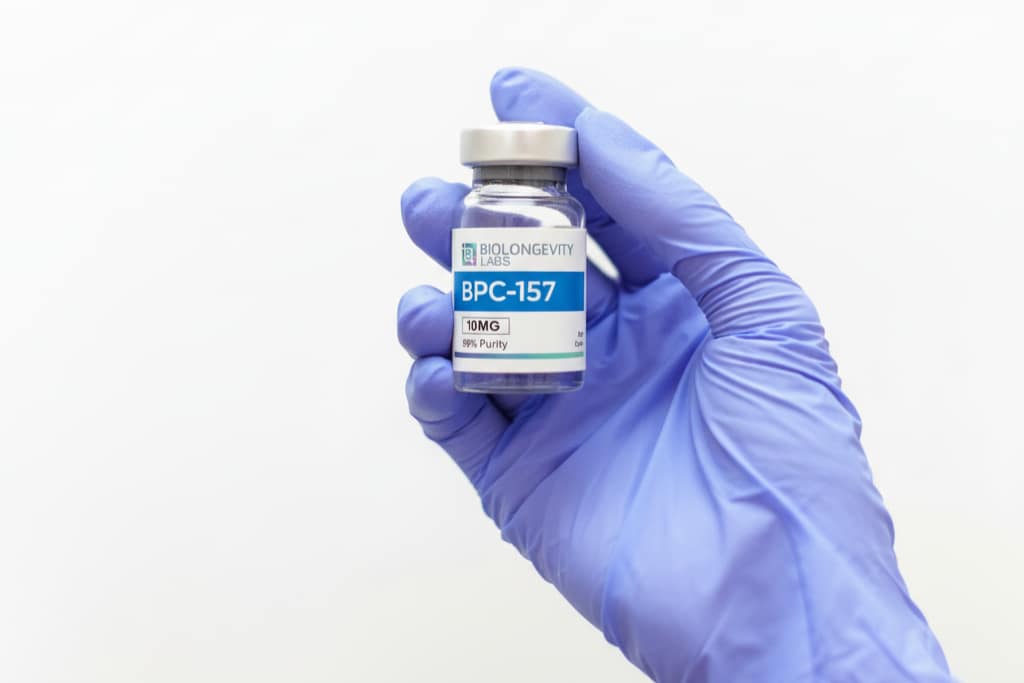
Validated > 99% Lab-grade Peptides
Peptide Pureness Analysis Service
- If you see a pureness portion on a peptide item, it almost certainly came from an HPLC evaluation.
- The quality and integrity of a peptide pureness dimension depend upon method specifications and documentation top quality.
- Tasks can vary from one example identification check to multi-lot comparability, residual review, solubility assessment, or stability-focused logical plans.
- Most peptide providers and research study laboratories rely on numerous well-established logical methods.
- As long as you acquire peptides from a trusted resource that provides a full certificate of evaluation, you can be positive in the peptide's purity quality and use extent.
- These solvents can impact peptide performance, so exact metrology is vital to ensure pureness and stop contamination in speculative settings.
Reviewing An Hplc Chromatogram
We can supply professional peptide pureness decision solutions making use of analytical reversed-phase HPLC combined with mass spectrometry. Each peptide is rigorously kept track of during the logical cycle according to rigid logical quality control and biosynthetic quality assurance requirements. HPLC is exceptional at answering the concern "how pure is this sample by chromatographic area percent? " It does not, on its own, confirm that the major optimal is the desired peptide.
By demanding peptides that feature confirmation of pureness and identity, scientists can greatly minimize the danger of speculative artefacts. Alternatively, making use of peptides that have actually passed third-party laboratory recognition helps make certain that the observed speculative results are really because of the desired peptide and not because of contaminants or mistakes. When you see peptides marketed as "research-grade," it refers to their intended usage and the degree of making oversight. Research-grade peptides are made for lab research usage just-- they are not generated under pharmaceutical GMP criteria and are not meant for usage as therapies or in human beings. These peptides feature a fundamental quality assurance plan, usually including HPLC purity analysis and MS verification of identification, guaranteeing they fulfill clinical criteria for pureness and composition.Crude, Desalted, And High-purity: Comprehending Peptide Qualities
Creative Proteomics is a trusted Advanced Peptide Research provider of proteomics evaluation solutions. Many thanks to our superior researchers and effective mass spectrometry system, we off provides international customer with extensive and expert peptide purity evaluation service by using RP-HPLC. If you have any concerns or details requirements, please do not hesitate to contact us.Quality Assurance And Item Compliance In The Pharmaceutical Sector
For groups that require deeper architectural review, the job can additionally be lined up with peptide sequence analysis and wider characterization assistance. Amino acid evaluation or other measurable methods can support outright content. Chiral approaches can resolve enantiomeric pureness where stereochemistry is a concern. Residual-solvent or water-content examinations can matter in production or stability contexts.Nonetheless, accomplishing ultra-high purity (say 99%) can be practically challenging and may not constantly be required, as we'll discuss later. The secret is recognizing what degree of purity suffices for your demands and how pureness is determined to begin with. For many study objectives, high pureness suggests you can Quality Standards be confident that the large majority of the particles in your vial are the proper peptide, which helps make sure experimental consistency and reproducibility. Our process is developed to relocate from sample context review to interpretable peptide data with minimal logical obscurity. Tasks can range from one example identity check to multi-lot comparability, recurring testimonial, solubility analysis, or stability-focused logical bundles. Hydrophobic peptides, highly standard series, changed constructs, and closely relevant analogs can be examined with method adjustments matched to their analytical threats.
If the COA provides "total impurities", that complements the purity number (e.g., 98% purity suggests 2% complete impurities). Lots of COAs also define well-known or "defined impurities" versus undefined ones, each with their private percentages if above a certain threshold. This degree of detail aids scientists comprehend if any minor peptide spin-offs exist. If you see numerous big optimals of comparable elevation, you're checking out either a low-purity sample or a mixture. If the major height has a noticeable "shoulder"-- a bump on one side-- that usually indicates a very closely relevant pollutant (like a removal peptide) that the column could not totally fix. The peptide is travelled through a basic purification action (frequently gel filtration or a quick reversed-phase clean-up) to eliminate salts, small-molecule byproducts, and scavengers from the bosom action. In theory, peptide pureness is measured by the chromatogram generated by reversed stage HPLC, and on top of that, we can get the number and family member quantity of feasible by-products by calculating the peak location. A top quality chromatogram has a single, balanced main peak with a flat standard on either side. " Trailing"-- where the peak tracks off gradually on one side-- can show column troubles, example overloading, or secondary interactions between the peptide and the fixed stage. In this arrangement, the fixed phase is hydrophobic (water-repelling), typically C18-bonded silica. The mobile phase is a slope of water and a natural solvent like acetonitrile, often with a small amount of trifluoroacetic acid (TFA) to sharpen the peaks.